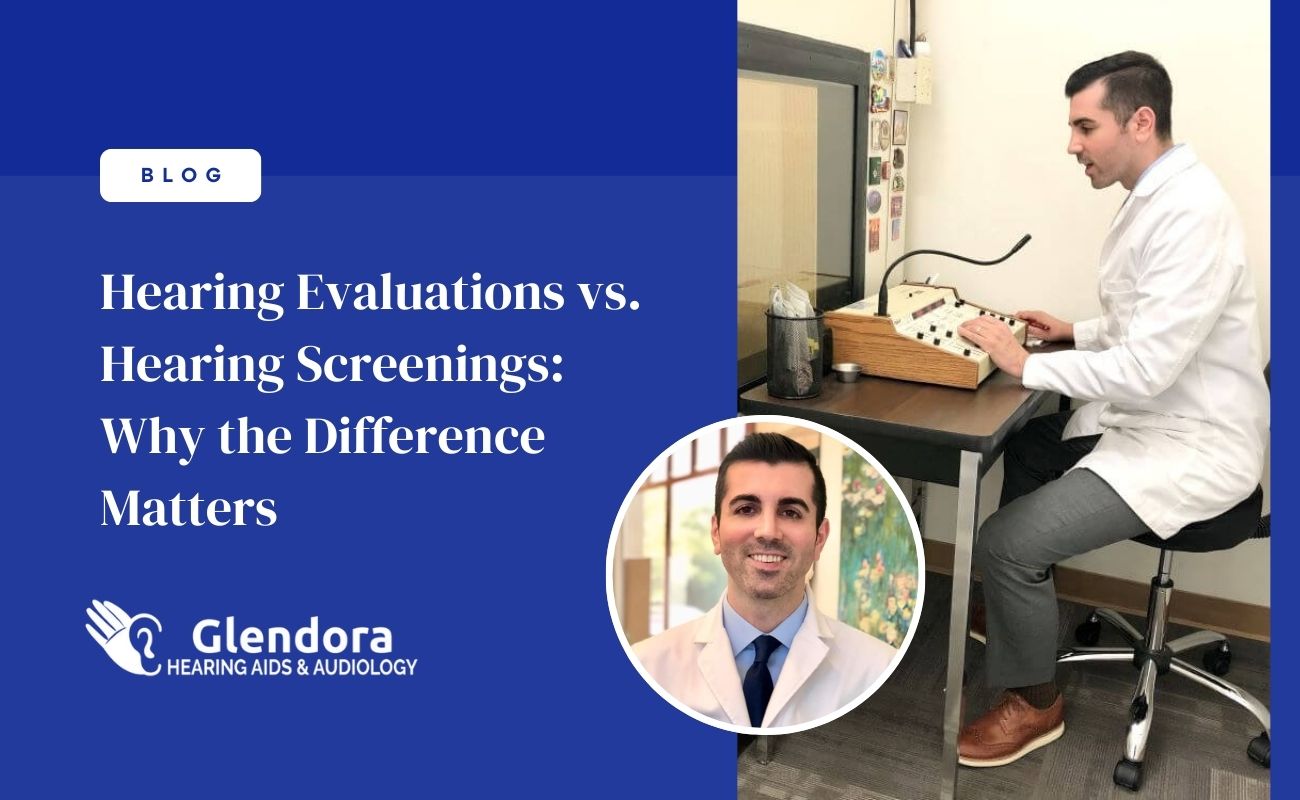
Hearing screenings provide quick pass/fail results, while comprehensive evaluations by audiologists include detailed testing, diagnosis, and personalized treatment recommendations for hearing health.

When it comes to assessing your hearing health, not all tests are created equal. Many people use the terms "hearing screening" and "hearing evaluation" interchangeably, but these are fundamentally different processes that serve distinct purposes. Understanding the difference between these two types of assessments can help you make informed decisions about your hearing care and ensure you receive the most appropriate level of testing for your needs.
A hearing screening is a quick, pass/fail test designed to identify whether you might have a hearing loss. Think of it as a preliminary check that determines if further testing is needed. Screenings are typically brief, taking just a few minutes to complete, and are often conducted in settings like community health fairs, schools, workplaces, or primary care offices.
During a hearing screening, you'll usually be asked to respond to tones played at specific volumes and frequencies through headphones. The screener is looking for whether you can hear sounds at predetermined levels. If you can hear the tones, you pass the screening. If you miss several tones, you fail the screening and are referred for a comprehensive evaluation.
Hearing screenings serve an important public health function by identifying individuals who may benefit from further assessment. They're an efficient way to detect potential hearing problems in large populations, especially in situations where resources or time are limited.
A comprehensive hearing evaluation is a diagnostic assessment performed by an audiologist that goes far beyond the simple pass/fail result of a screening. At Glendora Hearing Aids & Audiology, Dr. Ivory conducts thorough evaluations that examine all aspects of your hearing system and provide detailed, actionable information about your hearing health.
A complete hearing evaluation includes several components:
Consultation: We begin by discussing your hearing concerns, lifestyle needs, communication challenges, and medical history. Understanding when and where you struggle most with hearing helps us provide personalized recommendations. We'll also review any medications you're taking and your family's hearing health history.
Physical examination: Dr. Ivory uses an otoscope to examine your ear canals and eardrums, checking for earwax buildup, inflammation, infection, or structural issues that might be affecting your hearing. This examination is painless and provides valuable information about the health of your outer and middle ear.
Pure tone testing: You'll sit in a soundproof booth wearing headphones while Dr. Ivory plays tones at various frequencies and volumes. Unlike a screening that only checks a few points, a diagnostic evaluation tests your hearing across the full range of speech frequencies. You'll indicate when you hear each tone, and these responses are recorded on an audiogram that shows the softest sounds you can hear at each frequency tested.
Speech recognition testing: Hearing clearly isn't just about detecting sounds—it's about understanding speech. During this portion of the evaluation, Dr. Ivory will read words at different volumes and from varying distances. You'll repeat what you hear, and your responses are scored as a percentage. This reveals how well you understand speech, which is crucial information that a screening cannot provide.
Additional testing when needed: Depending on your results and symptoms, Dr. Ivory may recommend specialized tests such as otoacoustic emissions testing or auditory brainstem response testing. These assess how well your inner ear and auditory nervous system are functioning and can identify issues that other tests might miss.
After testing, Dr. Ivory will review your audiogram with you, explaining what the results mean for your hearing health. The audiogram provides a visual representation of your hearing abilities for each ear, showing the configuration and degree of any hearing loss present. This detailed information allows us to identify whether your hearing loss is conductive (related to the outer or middle ear), sensorineural (related to the inner ear or auditory nerve), or mixed.
The type and degree of hearing loss significantly influence treatment recommendations. A screening cannot provide this level of detail, which is why a comprehensive evaluation is necessary before any treatment decisions are made.
While hearing screenings can be performed by various healthcare workers with basic training, comprehensive hearing evaluations should be conducted by an audiologist. Audiologists like Dr. Ivory have doctoral-level education in hearing science and are trained to diagnose hearing disorders, identify medical conditions requiring physician referral, and provide evidence-based treatment recommendations.
Dr. Ivory's expertise ensures that your hearing evaluation is thorough, accurate, and interpreted correctly. His training allows him to recognize subtle patterns in hearing test results that might indicate specific conditions, determine whether hearing changes warrant medical attention, and develop individualized treatment plans based on your unique hearing profile and lifestyle needs.
Several situations call for a comprehensive hearing evaluation rather than just a screening:
You failed a hearing screening: Any failed screening should be followed by a complete diagnostic evaluation to determine the nature and extent of your hearing loss.
You're experiencing hearing difficulties: If you're struggling to follow conversations, frequently asking people to repeat themselves, or turning up the volume on devices, these symptoms warrant a full evaluation regardless of screening results.
You have risk factors: Exposure to loud noise, family history of hearing loss, certain medical conditions, or medications known to affect hearing are all reasons to schedule a comprehensive assessment.
You're considering hearing aids: Proper hearing aid fitting requires detailed diagnostic information that only a comprehensive evaluation can provide.
You have additional symptoms: Ear pain, drainage, dizziness, ringing in the ears (tinnitus), or sudden hearing changes should always be evaluated by an audiologist, as these may indicate medical conditions requiring treatment.
At Glendora Hearing Aids & Audiology, Dr. Ivory provides comprehensive hearing evaluations that give you complete insight into your hearing health. Our thorough assessment process goes beyond simple screening to identify the specific nature of any hearing difficulties you're experiencing and develop personalized solutions that fit your lifestyle.
If you're due for a hearing check, have concerns about your hearing, or have been referred for an evaluation following a screening, we encourage you to schedule a consultation with Dr. Kevin Ivory. Our practice is conveniently located at 130 West Route 66, Suite 210 in Glendora, and we're open Monday through Friday from 9am to 5pm. Call us at (626) 963-7200 to book your appointment and take the first step toward better hearing health.
.webp)
Book an appointment with Dr. Kevin Ivory to start hearing better today.
.png)